
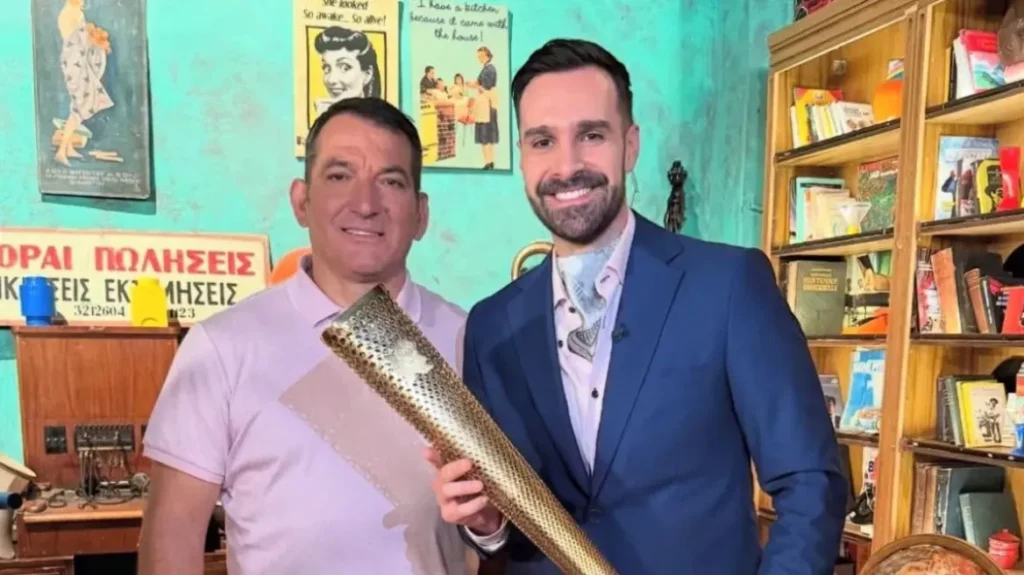
Pyrros Dimas auctioned his Olympic Torch through the popular TV show Cash or Trash in order to support the “SOS Children’s Villages”, raising the amount of €10,200.
The reaction of the Hellenic Olympic Committee (HOC), which rushed to condemn this action, seems misguided and even self-undermining.
We all know that the Olympic Games, especially in recent decades, rely heavily on sponsors, advertising contracts, commercial rights, and merchandising.
If, therefore, the use of Olympic symbols for “promotion” or “commercialization” is considered unacceptable by the HOC, then how is the presence of sponsors such as Coca-Cola, Samsung, or Toyota in the Olympic Torch Relay justified?
Why, also, is there no corresponding intervention on international platforms, such as eBay, where Olympic torches and memorabilia are sold—often at high prices and solely for profiteering?
Even if they are treated as investment items, collecting evidence of Olympic history cannot be considered illegitimate. Quite the opposite, in fact.
With this intervention, the HOC essentially scores an own goal, parodies itself, and attracts negative publicity for no reason.
In Dimas’ case, there was no personal benefit, but an act of charity with deep symbolism.
Both the show’s contributors and the Olympic champion himself spoke with respect about the Olympic ideals and the immense effort of the athletes, which is vindicated when it leads to victory and recognition.
Essentially, they provided free coverage and promotion for the Olympic Games.
Dimas made no profit (beyond the inevitable publicity), but donated the entire amount to charity. His act was selfless, bearing a clear social and symbolic character.
This is not the first time Olympic treasures have been auctioned for a good cause. We remember the case of Alexandros Nikolaidis, who, by his own last wish, decided that his medals should be auctioned so that the proceeds could be donated to charities—an act that moved the entire nation.
Conversely, a truly unfortunate moment was the stance of the Greek State when, due to indifference and inertia on the part of the competent bodies, the Bréal Cup—the historic trophy awarded to Spyros Louis for his triumph in the Marathon at the 1896 Olympic Games—was allowed to go to auction.
Instead of ensuring it remained in public hands, the state remained inactive.
Fortunately, the cup was not lost to Greece, thanks to the bidding of the Stavros Niarchos Foundation, which currently holds it.